
Top 7 Benefits of Restaurant Purchasing Software for F&B Business Managers & Owners
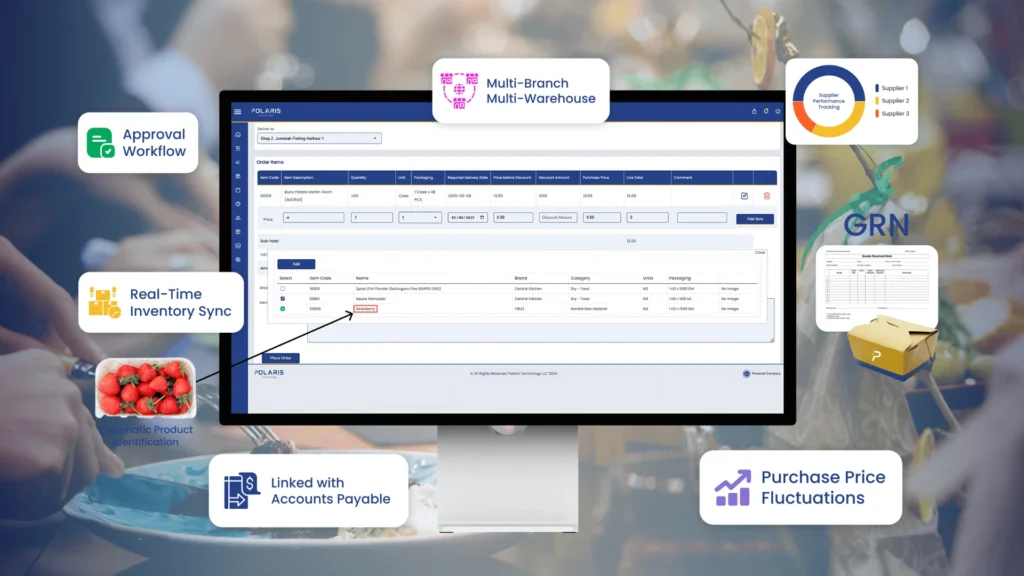
Purchasing is one of the most underestimated areas in restaurant operations.
It doesn’t generate revenue directly, but it quietly decides how much of that revenue you actually keep. Ingredient prices change. Suppliers miss deliveries. Stock piles up. Invoices don’t match what was received. And before you know it, food cost is off – again.
This is exactly what restaurant purchasing software helps F&B managers and owners solve.
In this article, we’ll break down the real benefits of using a restaurant purchase system, based on how purchasing actually works in F&B businesses – from kitchens and branches to central kitchens and finance teams. We’ll also show how a connected system like Polaris ERP helps managers stay in control without turning purchase into a complicated process.
How Purchase Works in Restaurants (Quick Context)
Before talking about benefits, it’s important to understand how restaurant purchasing typically flows inside a system like Polaris ERP.
Most F&B businesses deal with three main purchase activities:
- Material Requests
Initiated by chefs or branches when ingredients or items are needed. - Purchase Orders (LPOs – Limited Purchase Orders)
Raised by the purchasing team and sent to suppliers. This is the longest and most structured part of the process, usually used in multi-branch or department-heavy operations. - Goods Receiving & Invoicing
Goods are received, quantities are confirmed, inventory is updated, and supplier invoices are recorded and paid.
Purchase system flow, using Polaris ERP’s restaurant purchasing software looks like this:
LPO → GRN (Purchase Delivery) → Supplier Invoice → Accounting Settlement (Payment)
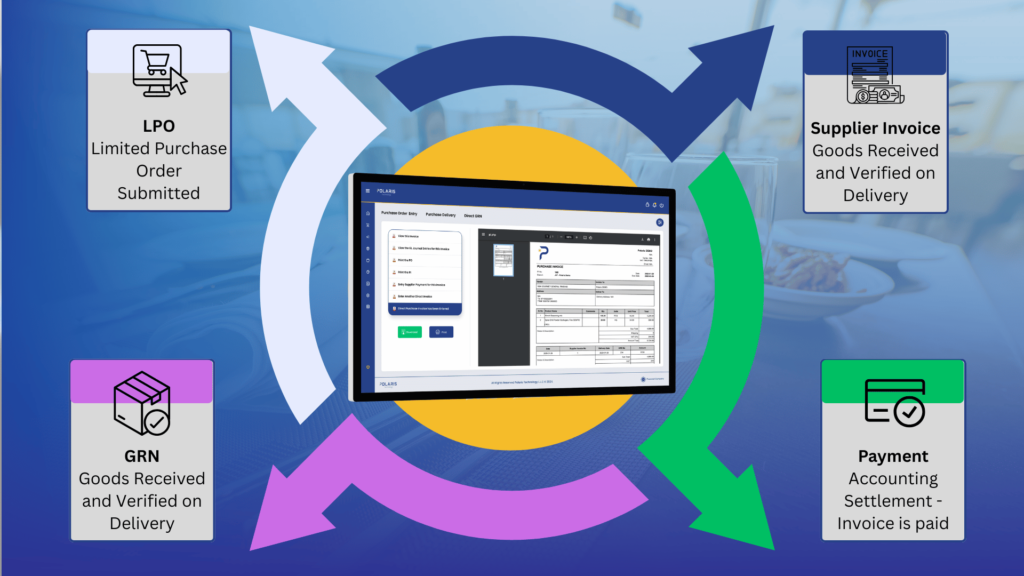
A proper purchase system connects these steps instead of treating them as separate tasks. And that’s where the benefits start to show.
Benefits of Restaurant Purchasing Software in Restaurants
Cost Discipline Through Controlled Purchasing
One of the biggest benefits of restaurant purchasing system is cost discipline.
With a structured purchase flow:
- Purchase orders are raised before buying anything
- Goods are received against what was ordered
- Invoices are matched to what was actually delivered
This creates accountability at every step.
Polaris ERP goes further by generating ingredient price fluctuation reports, showing when suppliers increase prices, even slightly. Over time, these “small” increases add up.
Instead of reacting too late, managers can use the actual purchase history and recorded invoices to spot price increases early, compare suppliers based on real invoice data and decide when it makes sense to shift vendors.
Better Waste Control by Buying Only What You Need
Over-purchasing is one of the most common causes of food waste. Without visibility into current stock, kitchens often order “just in case”. The result? Overstocked shelves, expired ingredients, and money thrown away. A purchase system connected to inventory and powered by AI changes this completely.
Because Polaris ERP is synced with inventory:
- You see available stock before placing orders
- You know what’s already in the store or branch
- Reordering is based on real consumption, not assumptions
Material requests from chefs can be checked against stock levels before approval, helping ensure only necessary quantities are purchased.
The outcome:
Less overstocking | Up to 80% less spoilage | More control over food cost
Time Saving for Managers and Purchase Teams
Manual purchasing eats time. Emails, WhatsApp messages, Excel sheets, phone calls, follow-ups, delivery checks – it adds up quickly. Restaurant purchase order (PO) software automates this flow.
With Polaris ERP:
- Purchase orders are created inside the system
- LPOs can be emailed directly to suppliers
- Goods Receiving Notes (GRNs) are recorded with a few clicks
- Invoices can be uploaded and matched in bulk
Instead of repeating the same tasks daily, weekly, and monthly, managers spend less time on admin and more time running their business. For growing restaurants, this efficiency becomes essential.
Real-Time Visibility Across Stock, Orders, and Deliveries
One of the most practical benefits for restaurant managers is visibility. At any moment, you can see:
- Which purchase orders are pending
- What has been delivered and what hasn’t
- Which branch or kitchen received the goods
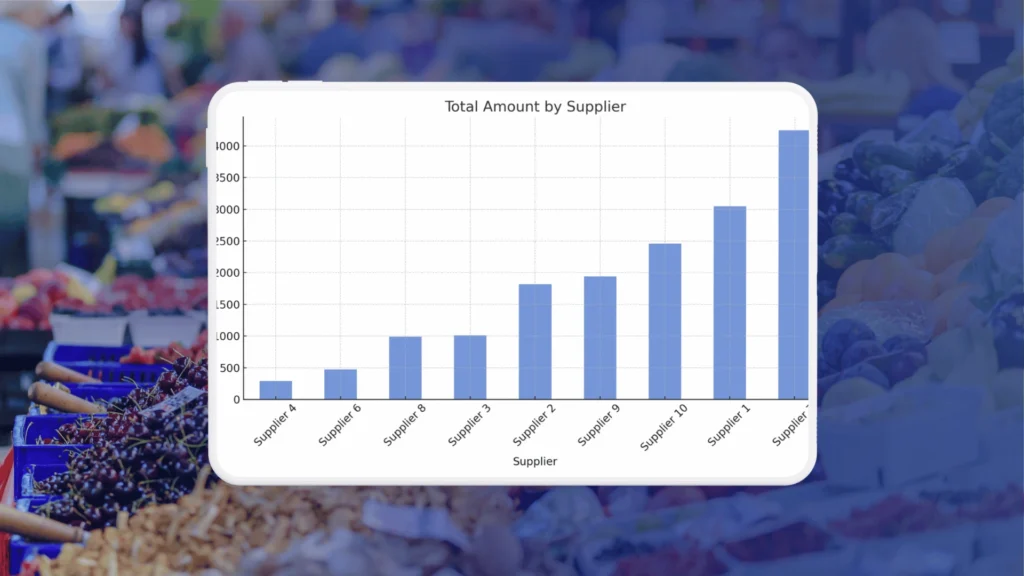
- Supplier delivery times and performance
In Polaris ERP, receiving is done by the person who actually gets the goods – chef or branch staff – and quantities can be edited to reflect what was truly delivered, not what was ordered. This avoids common issues like paying for missing items, inventory mismatches or disputes with suppliers.
You also gain insight into:
Your most-used suppliers | Delivery consistency | Purchasing patterns over time
These insights become very useful during supplier negotiation sessions.
Accurate Inventory & Accounting, without Double Work
A major advantage of a proper purchase system is clean accounting, automated. Here’s how it works in practice:
- LPOs don’t affect inventory or the General Ledger (GL)
- Goods Receiving Note (GRN) updates inventory once items are actually received
- Supplier Invoices create the financial liability (including VAT)
Polaris ERP automatically:
- Records GL entries for received items
- Tracks VAT from supplier invoices
- Uses clearing accounts to balance debit and credit
- Stores invoice references and memos for audits
For finance teams, this means:
Fewer reconciliation issues | Clear audit trails | No need for data duplication
Purchasing, inventory, and accounting stay aligned, without manual syncing, which is often exposed to human errors.
Smarter Supplier & Invoice Management
Restaurant businesses rarely receive one invoice per delivery. Suppliers often send multiple invoices over a period, which then need to be reviewed and paid together. Polaris ERP allows:
- Grouping multiple deliveries from the same supplier
- Creating one consolidated invoice for a selected time span
- Paying suppliers in bulk (including PDC – Post Dated Cheques)
This simplifies:
Payment scheduling | Cash flow planning | Supplier reconciliation
Everything stays documented: from what was ordered, to what was received, to what was paid.
Data-Backed Decisions During Price Fluctuations
Ingredient prices don’t stay stable, especially in the F&B industry. Suppliers often change prices in their advantage, without notifying their clients. Also, vendors’ prices are influenced by economic instabilities, or general price increase, in case of inflation, for instance.
Polaris ERP uses historical invoice data and predictive analytics to:
- Compare supplier prices over time
- Highlight unusual increases
- Recommend strategies to avoid unnecessary price hikes
This helps restaurant managers to act early, preventing unnecessary high expenses by empowering them to:
Decide to negotiate | Decide to change suppliers | Protect margins without price increase
Why Polaris ERP’s Restaurant PO System Makes a Difference
What sets Polaris ERP apart is not just its purchasing features; it’s how everything is connected. Purchasing doesn’t come alone. It’s natively linked with: sales (point-of-sale – POS system), inventory and recipe management, accounting & VAT reporting, supplier management.
- Food cost
What you buy, from whom, and at what price directly impacts your cost per dish. Even small price increases or over-ordering can push food cost above target without being noticed immediately, negatively affecting your profitability. - Stock levels
Purchase quantities determine whether you run out of key ingredients or end up with excess stock. Poor purchase planning leads to either service disruptions or wastage due to overstocking and products’ expiry. - Profitability
When purchasing is controlled and aligned with sales data, margins stay protected. Untracked price changes, duplicate purchases, or receiving errors quietly eat into profits. - Cash flow
Purchase timing, invoice grouping, and payment terms affect how much cash is tied up at any moment. Structured purchasing helps you plan payments, manage PDCs, and avoid unnecessary cash pressure.
For restaurants, central kitchens, cafés, sweet shops, and multi-branch operations, this level of connection is what keeps operations under control as the business grows.
You may also be interested in:
A System that Structures Purchase and Reduces Costs and Time
Restaurant purchase software is not about making things complicated. It’s about knowing what to buy and buying it at the right price. It’s about receiving exactly what you paid for and keeping inventory and accounts accurate
When purchasing is structured, visible, and connected, food cost becomes easier to manage. Polaris ERP’s restaurant purchasing software is built for real F&B workflows. And when purchasing works properly, everything else runs smoother.
If purchasing is still costing you time, money, or visibility, it’s probably time to fix the system behind it.
Contact Us & Book A Demo

