Kitchen Management: 10 Proven Tips to Run a More Efficient Restaurant Kitchen
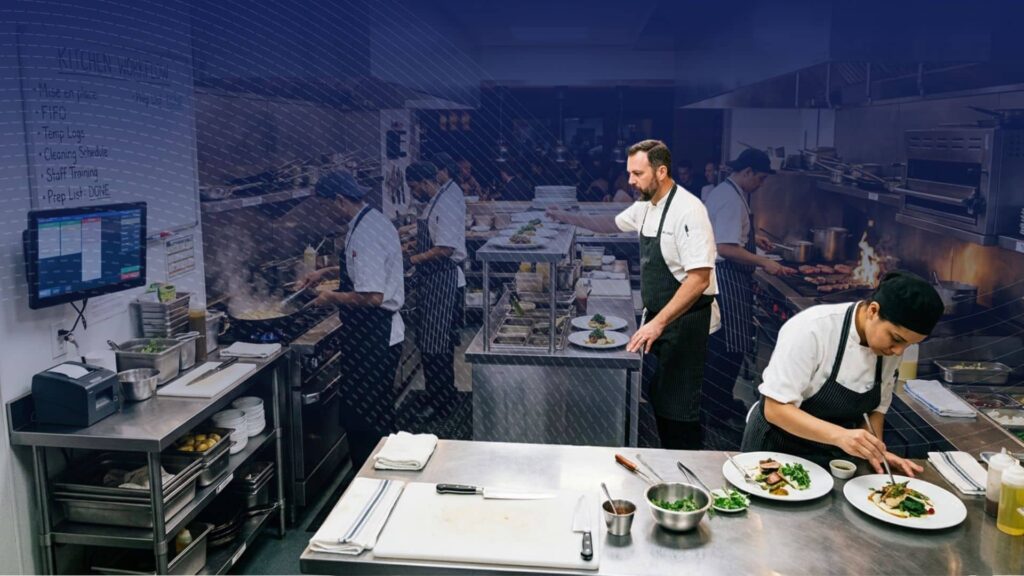
Running a restaurant kitchen is about much more than preparing great food.
A successful kitchen needs organized staff, accurate inventory, controlled food costs, clear communication, efficient purchasing, consistent recipes, and reliable technology working together.
When these areas are managed separately, small problems can quickly become expensive ones. Ingredients may be over-ordered, food may be wasted, recipes may become inconsistent, staff may struggle to understand priorities, and managers can spend hours trying to piece together information from spreadsheets and different systems.
The good news is that effective kitchen management doesn’t have to be complicated.
With the right processes and a restaurant management system, kitchen managers can create a more organized operation while giving their teams the information and tools they need to perform at their best.
In this guide, we’ll explore 10 practical kitchen management tips and explain how restaurant technology such as Polaris ERP can help turn these practices into everyday processes.
What Is Kitchen Management?
Kitchen management is the process of organizing and controlling the day-to-day activities of a restaurant’s back-of-house operation.
This includes:
- Managing kitchen staff
- Planning food preparation
- Controlling inventory
- Managing recipes and portions
- Monitoring food costs
- Reducing food waste
- Purchasing ingredients
- Maintaining food quality
- Coordinating orders with the front of house
- Monitoring kitchen performance
- Maintaining health and safety standards
The goal isn’t simply to make the kitchen faster.
The goal is to create a kitchen that is efficient, consistent, profitable, and easier for employees to work in.
1. Give Every Kitchen Employee Clear Responsibilities
One of the easiest ways for a kitchen to become chaotic is for employees to be unsure about who is responsible for what.
During a busy service, everyone should know:
- Which station they are responsible for
- What preparation needs to be completed
- Which ingredients need replenishing
- Who handles incoming orders
- Who checks food quality
- Who communicates with the manager
- What needs to be completed before service
Clear responsibilities reduce confusion and help employees take ownership of their work.
كيف يمكن أن يساعدك نظام بولاريس لتخطيط موارد المؤسسات
Polaris ERP gives restaurant managers access to operational information from a connected platform, helping different areas of the restaurant work from the same data.
By connecting sales, inventory, purchasing, recipes, and other restaurant operations, managers can make better decisions about what the kitchen needs before and during service.
2. Create Standardized Recipes and Preparation Procedures
Consistency is one of the biggest challenges in restaurant kitchens.
If two employees prepare the same dish using different quantities of ingredients, the result can be inconsistent food quality and unpredictable food costs.
Standardized recipes should define:
- Ingredients
- Quantities
- Portion sizes
- Preparation methods
- Cooking instructions
- Presentation requirements
- Expected food cost
A standardized recipe doesn’t just protect food quality.
It also gives managers a reliable way to calculate the actual cost of every menu item.
كيف يمكن أن يساعدك نظام بولاريس لتخطيط موارد المؤسسات
Polaris ERP includes recipe management and food cost management, allowing restaurants to connect recipes with inventory and sales data.
When ingredient prices change, managers can monitor the impact on recipe costs and make better decisions about pricing, purchasing, and menu profitability.
Better recipes → better consistency → better cost control.
3. Control Inventory Before It Controls Your Restaurant
Inventory management is one of the most important responsibilities in a restaurant kitchen.
Too much stock can lead to:
- النفايات
- Expired ingredients
- Cash tied up in inventory
- Unnecessary storage requirements
Too little stock can result in:
- Stockouts
- Menu items becoming unavailable
- Emergency purchasing
- Higher ingredient costs
- Customer dissatisfaction
The objective is to maintain the right amount of inventory at the right time.
كيف يمكن أن يساعدك نظام بولاريس لتخطيط موارد المؤسسات
Polaris ERP connects inventory with POS, purchasing, recipes, and accounting.
Inventory levels can be updated based on restaurant activity, helping managers understand what is being consumed and where stock needs attention. The system also supports reorder points and inventory monitoring.
Instead of relying entirely on manual spreadsheets, kitchen managers can work with connected operational data.
4. Track Food Waste and Identify Where Money Is Being Lost
Food waste isn’t always caused by one major mistake.
It can come from:
- Over-preparation
- النفايات
- Incorrect portions
- Kitchen mistakes
- Returned dishes
- Expired products
- Over-ordering
- Poor storage
- Incorrect forecasting
The problem is that waste can remain invisible when restaurants don’t record it properly.
A kitchen may throw away small amounts of food every day without realizing how much those losses add up to over a month.
كيف يمكن أن يساعدك نظام بولاريس لتخطيط موارد المؤسسات
Polaris ERP provides waste analysis as part of its restaurant inventory management capabilities.
Managers can use waste information alongside inventory and food-cost data to identify problem areas and understand where costs are increasing.
You can’t control waste you don’t measure.
5. Monitor Food Cost on a Regular Basis
Food prices change.
Supplier prices change. Portion sizes change. Recipes change. Waste changes.
That means your food cost can change even when your menu prices stay exactly the same.
Restaurant managers should regularly monitor:
Food Cost % = Cost of Ingredients ÷ Food Sales × 100
Monitoring food cost helps restaurant owners identify dishes that are becoming less profitable and determine whether recipes, portions, suppliers, or menu prices need to be reviewed.
كيف يمكن أن يساعدك نظام بولاريس لتخطيط موارد المؤسسات
Polaris ERP connects recipe costing, inventory, purchasing, and sales, giving restaurants a more complete view of food costs.
Its food cost tools can help managers understand the cost of individual dishes and identify opportunities to improve margins.
This transforms food-cost management from a periodic accounting exercise into an operational decision-making tool.
6. Improve Purchasing and Supplier Management
Good kitchen management starts before the ingredients arrive at the restaurant.
Purchasing teams need to know:
- What is currently in stock
- What is being consumed quickly
- What needs to be reordered
- Which suppliers provide the best prices
- How ingredient prices are changing
- How much stock the restaurant actually needs
Ordering based purely on experience or guesswork can lead to overstocking and unnecessary expenses.
كيف يمكن أن يساعدك نظام بولاريس لتخطيط موارد المؤسسات
Polaris ERP connects purchasing, inventory, recipes, and sales, helping restaurant managers make purchasing decisions using actual operational data.
This creates a stronger connection between what the restaurant sells and what it purchases.
The result is a more controlled purchasing process and less unnecessary inventory.
7. Keep Communication Between FOH and BOH Clear
The front of house and back of house must work as one team.
When communication breaks down, problems can quickly appear:
- Orders are delayed
- Modifications are missed
- Items are prepared incorrectly
- Customers wait longer
- Kitchen staff become frustrated
- Managers spend more time solving avoidable problems
Create clear procedures for:
- Sending orders
- Communicating modifications
- Handling unavailable items
- Prioritizing urgent orders
- Reporting kitchen issues
- Communicating stock shortages
كيف يمكن أن يساعدك نظام بولاريس لتخطيط موارد المؤسسات
A connected restaurant POS and back-office system helps reduce the need to manually transfer information between different systems.
Polaris ERP’s POS communicates with inventory, purchasing, accounting, and other restaurant functions, allowing sales activity to flow into connected operational processes.
This helps reduce manual data entry and improves visibility across the restaurant.
8. Train Employees for Consistency, Not Just Speed
A fast kitchen isn’t necessarily an efficient kitchen.
Employees need to understand:
- Recipes
- Portion control
- Food safety
- Equipment
- Preparation procedures
- Cleaning procedures
- Inventory handling
- Waste procedures
- Order flow
Training should be continuous rather than something that happens only when a new employee joins.
A well-trained employee can make better decisions, work more independently, and maintain consistent standards during busy periods.
How Polaris ERP Can Support Better Operations
Technology should not replace training.
Instead, it should give employees clearer processes and better information.
When recipes, menu information, inventory data, purchasing information, and sales are connected, employees and managers can work from standardized operational information rather than relying entirely on memory or disconnected spreadsheets.
9. Use Restaurant Data to Make Better Kitchen Decisions
One of the biggest mistakes restaurant managers can make is relying only on intuition.
Experience is valuable, but restaurant data can reveal things that aren’t always obvious.
For example:
- Which dishes sell the most?
- Which dishes generate the best margins?
- Which ingredients are increasing in cost?
- Which products are being wasted?
- When are sales highest?
- Which locations perform best?
- Where are inventory discrepancies occurring?
كيف يمكن أن يساعدك نظام بولاريس لتخطيط موارد المؤسسات
Polaris ERP brings sales, inventory, purchasing, accounting, and other operational information together, helping restaurant managers access more complete business insights from one platform.
Instead of asking, “What do I think is happening?”
Managers can start asking:
“What does the data tell us?”
10. Use Technology to Build a Scalable Kitchen Operation
Manual processes may work when you have one small restaurant.
But as the business grows, managing everything through spreadsheets, paper documents, separate POS systems, and disconnected accounting tools becomes increasingly difficult.
Multiple locations create even more challenges:
- Different inventory levels
- Different purchasing requirements
- Different staff
- Different sales performance
- Different food costs
- Different waste levels
Restaurant technology can help standardize operations while giving management greater visibility.
كيف يمكن أن يساعدك نظام بولاريس لتخطيط موارد المؤسسات
Polaris ERP is designed as an all-in-one restaurant management platform, connecting functions such as:
- نظام نقاط البيع
- المخزون
- Purchasing
- Recipe management
- Food costing
- المحاسبة
- HR
- Payroll
- Delivery management
- Reporting and business insights
The platform is designed to connect these functions rather than forcing restaurants to manage each one separately.
That means restaurant owners can manage more of the business from one connected ecosystem.
Kitchen Management Checklist
Before your next service, ask yourself:
People
- Do all employees understand their responsibilities?
- Are kitchen stations properly assigned?
- Are employees adequately trained?
Preparation
- Are recipes standardized?
- Are portions controlled?
- Is the kitchen prepared before peak service?
المخزون
- Do you know exactly what is in stock?
- Are reorder levels defined?
- Are stock discrepancies investigated?
تكاليف الطعام
- Do you know the actual cost of each dish?
- Are supplier price changes affecting your margins?
- Are portions consistent?
الهدر
- Are kitchen staff recording waste?
- Do you know which ingredients generate the most waste?
- Are recurring waste patterns being addressed?
Purchasing
- Are purchases based on actual consumption?
- Are supplier prices being monitored?
- Are you over-ordering products?
التكنولوجيا
- Are your POS, inventory, purchasing, and accounting systems connected?
- Are managers spending too much time preparing reports manually?
- Do you have real-time visibility into restaurant performance?
If you answered “no” to several of these questions, your kitchen may have an operational problem—not a people problem.
How Polaris ERP Brings Kitchen Operations Together
The biggest advantage of an integrated restaurant ERP is that different parts of the operation don’t have to work in isolation.
For example:
Customer places an order → POS records the sale → inventory reflects ingredient consumption → recipe costing tracks the dish cost → purchasing identifies stock requirements → accounting records the financial impact.
Instead of entering the same information into multiple systems, connected processes can help reduce manual work and improve data consistency.
Polaris ERP is built around this connected approach, linking restaurant sales with inventory, purchasing, accounting, recipes, and other operational functions.
The Bottom Line: A Better Kitchen Starts With Better Systems
A well-managed restaurant kitchen isn’t necessarily the one with the most employees or the most expensive equipment.
It’s the kitchen where people, processes, information, and technology work together.
Clear responsibilities create accountability.
Standardized recipes create consistency.
Inventory control protects margins.
Waste tracking reduces unnecessary losses.
Better purchasing improves cost control.
Training creates stronger teams.
And connected restaurant technology gives managers the visibility they need to make better decisions.
For restaurants looking to move beyond disconnected spreadsheets and multiple systems, Polaris ERP provides an integrated platform for managing POS, inventory, purchasing, recipes, food costs, accounting, HR, and more.
Ready to Take Control of Your Restaurant Kitchen?
Don’t wait until food waste, rising costs, inventory discrepancies, or operational chaos start affecting your profits.
Discover how Polaris ERP can help you connect your restaurant operations, control food costs, reduce waste, and manage your business from one platform.
Book a free Polaris ERP demo and see how your restaurant can operate smarter.