How to Manage Multiple Restaurant Locations: 8 Challenges and How Polaris ERP Helps
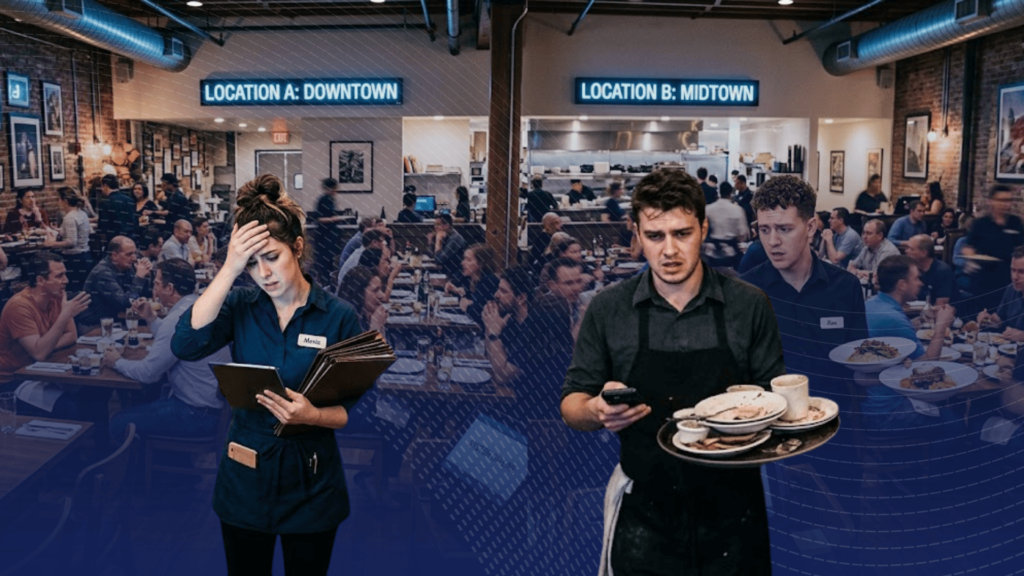
Managing one restaurant is challenging enough. Managing two, five, ten, or more locations can completely change the way your business operates.
As your restaurant group grows, so does the complexity of managing employees, sales, inventory, purchasing, accounting, food costs, and daily operations across multiple branches.
The biggest challenge isn’t simply having more restaurants.
It’s keeping every location connected, consistent, and profitable.
Without the right systems, restaurant groups can end up relying on spreadsheets, WhatsApp messages, disconnected software, and manual reports. This makes it difficult for management to understand what is happening across the business in real time.
The original source highlights several challenges faced by multi-location restaurant operators, including staffing demand, communication, manual reporting, task management, employee engagement, and disconnected technology.
This is where Polaris ERP can make a difference.
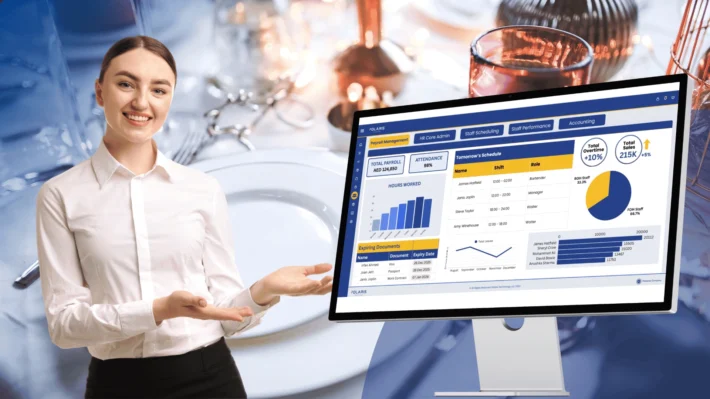
Polaris ERP brings essential restaurant operations together in one connected platform, helping restaurant owners and managers gain better visibility across locations and make faster, data-driven decisions.
Let’s look at the biggest challenges of managing multiple restaurant locations and how Polaris ERP can help.
1. Managing Staff Across Multiple Locations
One of the biggest challenges for growing restaurant groups is making sure each location has the right people available when they are needed.
One branch may be extremely busy while another has more employees than necessary.
Demand can change by:
- Location
- Day of the week
- Time of day
- Season
- Promotions
- Special events
- Delivery demand
The original source highlights how fluctuating demand can leave one location understaffed while another has employees working during slower periods.
How Polaris ERP Helps
Polaris ERP provides centralized HR and staff management, allowing management to keep employee information organized across the business.
Instead of managing employee information separately for every branch, restaurant groups can maintain a more structured view of their workforce.
This helps management:
- Organize employee information
- Monitor staff-related operations
- Manage payroll processes
- Maintain centralized employee records
- Improve visibility across locations
When your restaurant grows, having one source of operational information becomes increasingly important.
2. Keeping Every Restaurant Consistent
A successful restaurant brand needs consistency.
Customers expect the same quality, service, pricing, and operational standards whether they visit Branch A or Branch B.
But consistency becomes harder when every location starts developing its own processes.
Different purchasing methods.
Different inventory practices.
Different recipes.
Different reporting methods.
Different approaches to managing costs.
How Polaris ERP Helps
Polaris ERP helps restaurant groups centralize their key operational processes.
With connected POS, inventory, purchasing, food cost, accounting, HR, and reporting functions, management can establish more consistent processes across locations.
This makes it easier to compare branches and identify locations that may need additional attention.
One brand. One operational structure. Better visibility across every branch.
3. Controlling Inventory Across Multiple Locations
Inventory becomes significantly more complicated as your restaurant group grows.
You need to know:
- What each location has in stock
- What each location needs
- Which products are running low
- How much each branch is purchasing
- How ingredients are being consumed
- Where waste is occurring
- Which suppliers are being used
- How inventory affects food costs
The original source also identifies cross-location inventory ordering as an area where task and operational difficulties can arise.
How Polaris ERP Helps
With Polaris ERP Inventory Management, restaurant groups can centralize inventory operations and gain greater visibility into stock and purchasing.
You can manage:
📦 Inventory levels
🛒 Purchasing
🏪 Suppliers
📋 Stock movements
🍽️ Ingredient consumption
♻️ Waste
💰 Food costs
Instead of waiting for end-of-month reports to discover inventory problems, managers can monitor operational information more closely and take action sooner.
4. Understanding Which Locations Are Actually Profitable
Revenue alone doesn’t tell you whether a restaurant is performing well.
A branch might generate high sales but still have poor profitability because of:
- High food costs
- Excessive waste
- High purchasing costs
- Labor expenses
- Operational inefficiencies
- Poor inventory control
This is why restaurant groups need more than sales reports.
They need a complete view of business performance.
The original source emphasizes the importance of restaurant analytics and having quick access to metrics that help managers evaluate location-specific performance and the business as a whole.
How Polaris ERP Helps
Polaris ERP provides reporting and analytics that help management understand restaurant performance.
You can analyze information such as:
📊 Sales performance
💰 Revenue
📦 Inventory
🍽️ Food costs
🛒 Purchases
💵 Financial information
👥 Staff-related data
🏪 Branch performance
This gives restaurant owners a clearer picture of what’s happening across their business.
Instead of asking, “How are my restaurants doing?” you can start asking, “Which locations are performing best, where are costs increasing, and what should we improve?”
5. Eliminating Manual Reports
As your restaurant group grows, reporting can become a full-time job.
Managers may spend hours collecting information from different branches, spreadsheets, POS systems, accounting systems, and inventory reports.
By the time the report is finished, the information may already be outdated.
The source identifies manual reporting as a major challenge for restaurant managers, particularly when labor and payroll information must be analyzed across large teams.
How Polaris ERP Helps
Polaris ERP connects your restaurant’s operational data within one platform.
Instead of manually combining information from different systems, management can access centralized reports covering areas such as:
- Sales
- Inventory
- Purchasing
- Food cost
- Accounting
- Staff
- Branch performance
This saves administrative time and helps managers focus on making decisions rather than building spreadsheets.
6. Improving Communication Between Locations
Communication becomes more difficult as the number of employees and branches increases.
Managers need to communicate operational information quickly and consistently.
Without structured processes, businesses can end up relying on endless WhatsApp groups, phone calls, emails, and spreadsheets.
The original source identifies miscommunication as a major challenge for large restaurant teams because poor communication makes scheduling and coordination more difficult.
How Polaris ERP Helps
Polaris ERP creates a centralized operational environment where important business information is connected.
Instead of relying on separate systems for every department, restaurant management can work with connected data across:
POS → Inventory → Purchasing → Accounting → HR → Reporting
This creates better visibility and reduces the risk of decisions being made using outdated or inconsistent information.
7. Managing Food Costs Across Every Branch
Food cost is one of the most important numbers in the restaurant business.
When you operate multiple locations, even a small increase in ingredient costs or waste can have a significant impact on your overall profitability.
For example, if one branch is consistently using more ingredients than expected, management needs to identify the problem quickly.
How Polaris ERP Helps
Polaris ERP’s food cost and inventory capabilities help restaurant operators understand how ingredients and purchases affect profitability.
Management can monitor:
- Recipe costs
- Ingredient costs
- Purchasing prices
- Inventory consumption
- Waste
- Food cost performance
This gives restaurant owners better visibility into where their margins are being affected.
Better food cost control can lead to better financial control.
8. Managing Everything From One Connected System
This may be the biggest challenge of all.
As restaurants grow, they often add more software.
One system for POS.
Another for inventory.
Another for accounting.
Another for HR.
Another for purchasing.
Another for reporting.
The result can be a complicated technology stack where information is spread across multiple platforms.
The source emphasizes that an integrated technology stack allows restaurant groups to analyze labor, sales, inventory, and profitability with a broader view of the business.
How Polaris ERP Helps
Polaris ERP is designed to bring your restaurant operations together.
Instead of managing disconnected systems, restaurant groups can manage key functions through one ERP platform.
Polaris ERP can help you manage:
🍽️ POS & Sales
Process orders and monitor sales across your restaurants.
📦 Inventory Management
Track stock and inventory activity across locations.
🍔 Food Cost Management
Monitor recipe and ingredient costs to protect margins.
🛒 Purchasing
Manage purchasing and supplier operations.
💰 Accounting & Finance
Keep financial information connected to your restaurant operations.
👥 HR & Payroll
Manage employee information and payroll processes.
♻️ Waste Management
Identify waste and improve cost control.
🚚 Delivery Management
Manage delivery operations alongside your restaurant sales.
📊 Reports & Analytics
Turn operational data into actionable business insights.
Why Restaurant Groups Need an ERP System
When you have one restaurant, manual processes may still feel manageable.
But as you add locations, those same processes become increasingly difficult to control.
A spreadsheet that works for one branch may become a nightmare for ten.
A POS system that works for one location may not provide enough visibility for a growing restaurant group.
And manually collecting reports from every branch can slow down decision-making.
Growth requires better systems.
Polaris ERP gives restaurant groups a centralized platform designed to connect the operational areas that matter most.
One Restaurant Group. Multiple Locations. One Connected Platform.
Managing multiple restaurant locations shouldn’t mean managing multiple disconnected systems.
Your restaurants need to work together.
Your data needs to be connected.
Your managers need visibility.
And your decisions need to be based on accurate operational information.
That’s the advantage of a connected restaurant ERP system.
Polaris ERP helps restaurant owners and managers bring POS, inventory, food costs, purchasing, accounting, HR, payroll, waste management, delivery, and reporting together in one platform.
Whether you’re managing a growing café chain, restaurant group, bakery brand, cloud kitchen network, or multiple food-service locations, Polaris ERP can help you build a more organized and scalable operation.
Ready to Take Control of Your Restaurant Group?
Don’t let disconnected systems and manual processes slow down your growth.
See how Polaris ERP can help you manage your restaurant operations from one connected platform.
📲 Book a free demo today and discover a smarter way to manage multiple restaurant locations.
Polaris ERP One Platform. Smarter Restaurant Operations.