Restaurant Experience in 2026: QR Code or Friendly Staff Smile?
Does hospitality live in a staff member’s smile, or in the efficiency of a guest scanning a QR code to order and pay on their own terms? While some worry that digital systems feel “cold,” the reality is a global shift toward the “cashless economy.”
In the UAE, 70% of restaurant bills are now settled digitally, while in the UK, 84% of diners use QR codes to view menus and pay, helping 72% of operators navigate staff shortages. In the U.S., “pay-at-table” adoption is projected to reach 102 million active scanners in 2026 – that’s 1 in 3 Americans choosing efficiency.
This isn’t about replacing the human connection; it’s about making space for it. By letting technology handle the friction of the bill, your team is finally free to focus on the guest experience, turning a transaction into true hospitality.
Advantages of QR Code in Restaurants
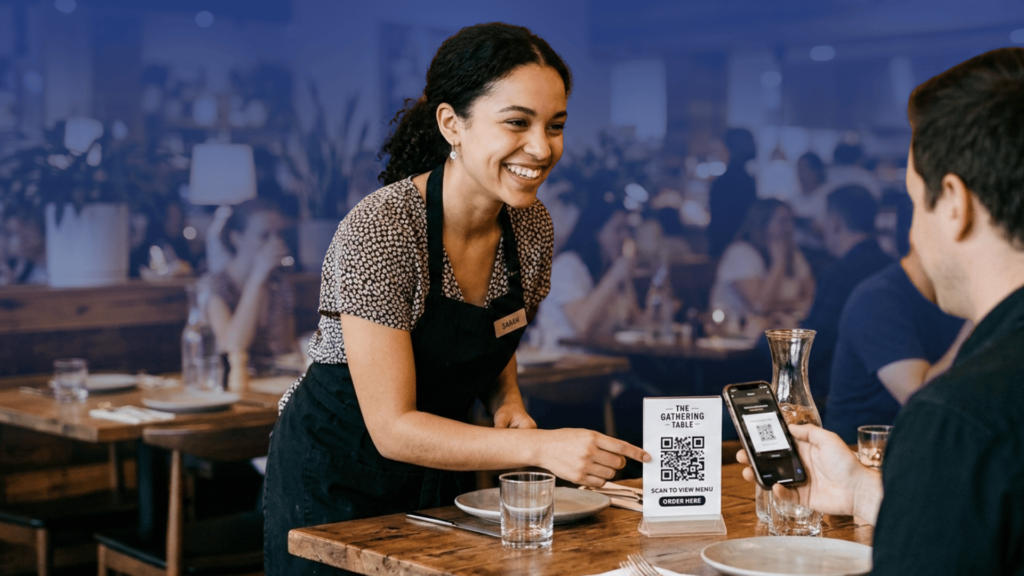
The most sought-after advantage of using QR codes in restaurants is efficiency. Guests don’t need to wait to receive a menu; they can simply scan it on their mobile phones from the standalone sticker at their table. Similarly, they don’t need to wait for the bill to be brought to them.
This is particularly useful when a dining venue is busy serving food to tables or preparing delivery and takeaway orders. Instead of waiting for the waiter, who might be distracted with other activities, to bring the bill, clients can scan the QR code at their table, view the total, and pay for it digitally.
That’s it. No human contact in the process, and about 20 minutes saved in the dining experience. With average orders per table at AED 80 in the fast casual restaurants, this can mean doubling revenue in an hour.
Another advantage is hygiene and health. Instead of touching several hard-copy menu pages, which have been in contact with many others before, clients only need to scan a QR code on their phones. Bacteria can transfer from a menu to a customer’s hands at a rate of approximately 11%. A QR code on a restaurant table reduces the risk of contracting bacteria like E. coli, norovirus, and others that can be found in F&B outlets.
Disadvantages of QR Code in Restaurants
A Friendly Smile or a QR Code?
When going out, many patrons crave the atmosphere of genuine human interaction. From the welcoming hostess at the entrance to a smiling server offering recommendations, these moments make a guest feel comfortable. Whether it’s small talk while waiting for food or a human bringing the check with a complimentary refreshment, that final wave goodbye is – as they say – priceless.
If you’ve watched The Bear, you know exactly what this looks like. Think of Richie (Cousin) in season one, using his “human-first” approach to welcome regular guests in typical Chicago fashion. He asks about their family members or their pets’ health, creating a connection that tech simply cannot replicate.
Harmony, Not Replacement
Some argue that a QR code threatens this authentic connection, but why does it need to be so? QR codes are simply tools to make ordering and paying easier for guests in a rush and to lighten the load for your team. This doesn’t stop a host, a chef, or an owner from checking in on a table or engaging in small talk, be it in a QSR, fast-casual, or even fine dining restaurant. In fact, staff can even guide uncomfortable guests through the technology, proving that they care about their comfort in every detail.
How does the QR Code work in Hospitality?
At the surface level, a QR code is just a portal to a menu. But for a restaurant pro, the real magic happens in the “handshake” between that scan and your back-office. This is where Polaris ERP changes the game.
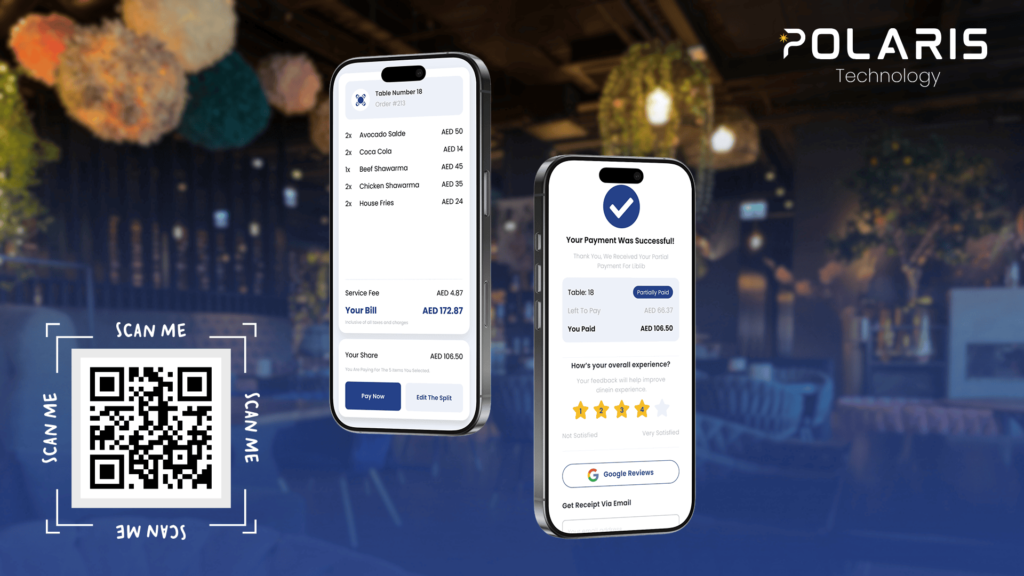
When a guest scans a QR code, whether through a powerhouse platform like Kayana in the UK or our local partner Qlub, they aren’t just looking at a static list. They are interacting with a live inventory.
The moment a guest places an order via the QR code, Polaris ERP goes to work.
- Instant Inventory Updates: The system automatically “deducts” the ingredients from your stock. If your chef sells the last portion of Wagyu, Polaris ERP updates the digital menu across all QR codes instantly. This removes the awkward “Sorry, we’re out of that” conversations five minutes after the order was placed.
- Real-Time Accounting: On the payment side, the transition is seamless. When the bill is settled through the QR code, the sale doesn’t just sit in a third-party app; it flows directly into the Polaris ERP General Ledger.
You no longer need a manager sitting in the office for two hours manually inputting sales data or reconciling stock counts. This automation saves restaurateurs time to focus on hospitality, whether this is improving customer experience, adding new combos to the menu that will increase profitability, or looking into ways to reduce waste.
Nowadays, QR codes in F&B facilities are a reality that can’t be hidden behind bushy physical menus. Clients expect to scan QR codes in restaurants for efficiency, as well as for health benefits. The same is true for human experience. No, QR codes don’t replace a human smile, and nor should they, but they can coexist to improve customer experience in restaurants.
QR Codes – Frequently Asked Questions
How much of an investment is needed to adopt QR codes in restaurants?
The “cost” of QR code technology is often misunderstood. While there is a setup fee for the hardware (stickers or stands) and a monthly SaaS subscription for the integration with Polaris ERP, the ROI is usually realized within the first 30 days. By reducing labor hours spent on manual data entry and increasing table turnover by roughly 15-20 minutes per party, the system often pays for itself through increased volume alone.
Is my staff going to feel “replaced” by this QR code technology?
Quite the opposite. You are replacing their frustration, not their function. When your team isn’t sprinting back and forth to bring bills or update “sold out” items, they have more time to actually engage with guests. While tech handles the transaction, your people handle the connection, for a rounded hospitality experience.
How long does it take to connect a QR provider Polaris ERP?
Setting this up is like a quick “sync” that gets your systems into harmony. Because Polaris ERP is designed to be open and flexible, connecting with your favorite QR menu and payment platforms usually takes less than 48 hours. Every order and every payment flows right into your books in real-time, keeping your inventory perfectly aligned with your kitchen and your accounting effortless.
You may also be interested in:
Dining in the Digital Age: How Contactless Technology is Transforming Restaurants
Need help rolling out QR code technology in your F&B business?
Contact Us & Book A Demo