The Food Delivery Surge: Why Integration is No Longer Optional for UAE Restaurants
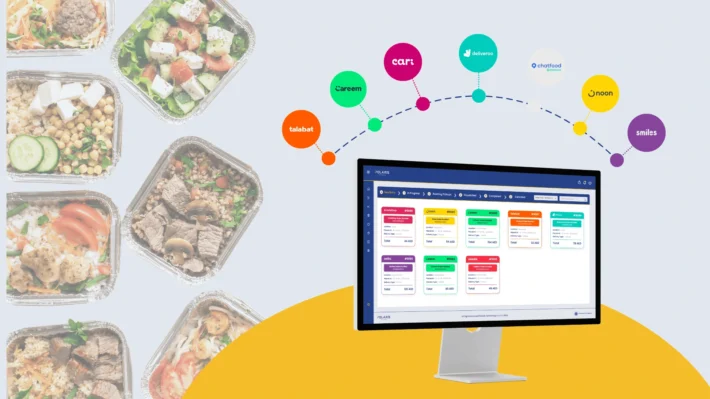
The UAE food delivery market is seeing a surge in orders due to shifting consumer behaviors during regional instability. Restaurants are increasingly adopting delivery integration systems like Polaris ERP to manage this increase in volume and integrate multiple delivery aggregators into a single dashboard.
KEY TAKEAWAY BY POLARIS ERP
Recent events in the Gulf have changed how people in the UAE eat. With safety concerns and movement restrictions, fewer people are sitting down at your tables. The reality is tough: dine-in revenue in the UAE might have dropped by roughly 30% to 40% during the height of the tension. In a city like Dubai, that is millions of AED in lost sales every single week.
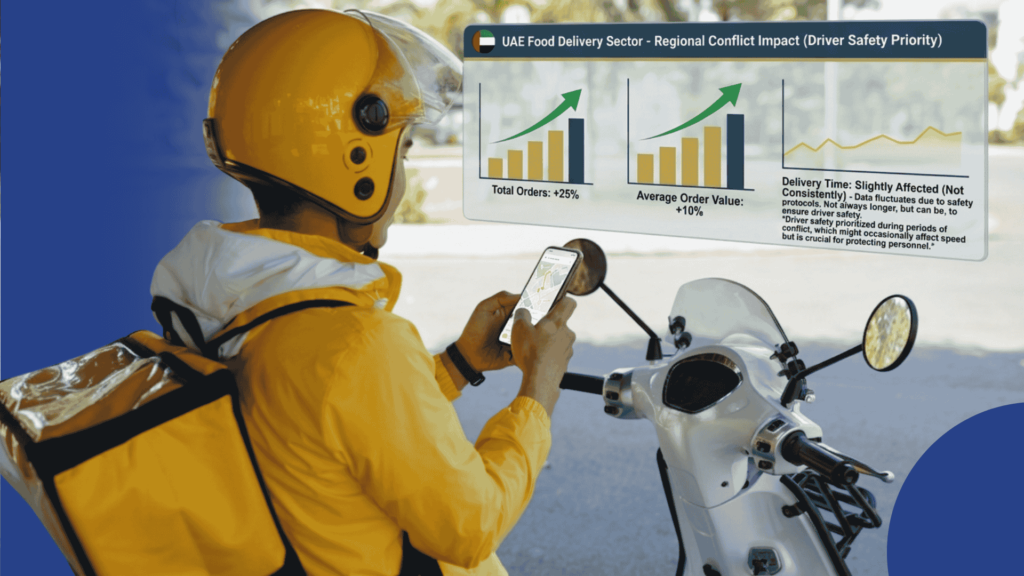
But while the dining rooms are quiet, the kitchens are still keeping busy. Between the start of the conflict and the day after the Eid al Fitr celebrations (2026), delivery orders in the UAE might have surged by over 25%, given the shift from dine-in to order-in. People aren’t stopping their spending; they are just shifting it to their front doors. For restaurant owners, the message is clear: delivery is no longer a nice-to-have side hustle; it is your primary lifeline in uncertain times.
What Are the Big Food Delivery Apps Doing
If you’ve checked your delivery dashboards lately, you know the main delivery food providers are responding to the situation affecting the UAE. Talabat, Deliveroo, noon, and Careem have all adjusted their operations to keep riders safe. According to Yahoo, referencing Verdict Food Service:
- Talabat and Careem have officially flagged that delivery times will be longer.
- Deliveroo has occasionally paused services in certain areas or during specific hours.
- noon Food took the stand of helping restaurants by waving platform fees.
The Surge Toward the Food Delivery Apps: Digital Survival of the Fittest
While restaurant tables sit empty, the demand for food hasn’t disappeared; it has just moved. Gulf News recently confirmed that recent regional disruptions led to a “sudden spike in app usage” as residents stayed home and ordered in. However, simply being “available” on a delivery app is no longer enough to guarantee success.
Major platforms like Talabat, Deliveroo, noon, and Careem have been forced to prioritize rider safety over delivery speed, often flagging that orders will take longer than usual. When these delivery giants are struggling with external logistics, your internal kitchen operations cannot afford to add to the chaos. If a customer waits 50 minutes for a meal, the order must be 100% correct, or you risk losing that client forever.
The Invisible Cost of Staying “Offline”
For F&B establishments that still haven’t embraced delivery apps, the situation is becoming critical. These businesses are currently facing a double-sided loss:
- Vanishing Footfall: With residents staying indoors for safety, “walk-in” revenue has essentially dried up, leaving staff standing in empty dining rooms.
- The Competitor Edge: Every customer you lose is likely ordering from a competitor across the street who is integrated with delivery apps. By staying offline, you aren’t just missing a sale; you are actively handing your loyal customers to other brands.
- The Integration Gap: Even for those who have the apps but haven’t integrated them with their POS, the manual work is a silent killer. Entering orders by hand leads to delays, typos, and kitchen errors – mistakes that a highly stressed, hungry and impatient customer will not forget; especially when there are lots of other restaurants available on delivery apps.
How’s the Delivery “Tablet Chaos” Affecting Restaurant Performance
Most UAE restaurants are now using two, three, four or more different tablets, one for each delivery app. When the rush hits, your staff is jumping from a Talabat screen to a noon Food screen, then trying to punch it all into your POS. This is where the mistakes happen:
- Confusing a Deliveroo order with a Careem one.
- Sending the wrong items to a frustrated customer.
- Missing a new order alert because the tablet was muted, or you forgot to punch it in the POS.
In an uncertain market, these mistakes kill your reputation and your margins. And clients can and will shift to other restaurants who can provide a more reliable service.
How to Manage Delivery Tablet Chaos with Delivery Apps Integration
This conflictual situation that’s currently affecting most of the Gulf countries is the ultimate proof that you need a delivery integration solution to survive. Staff shouldn’t spend most of their time manually handling tablets. But if they do, know that this needs to change.
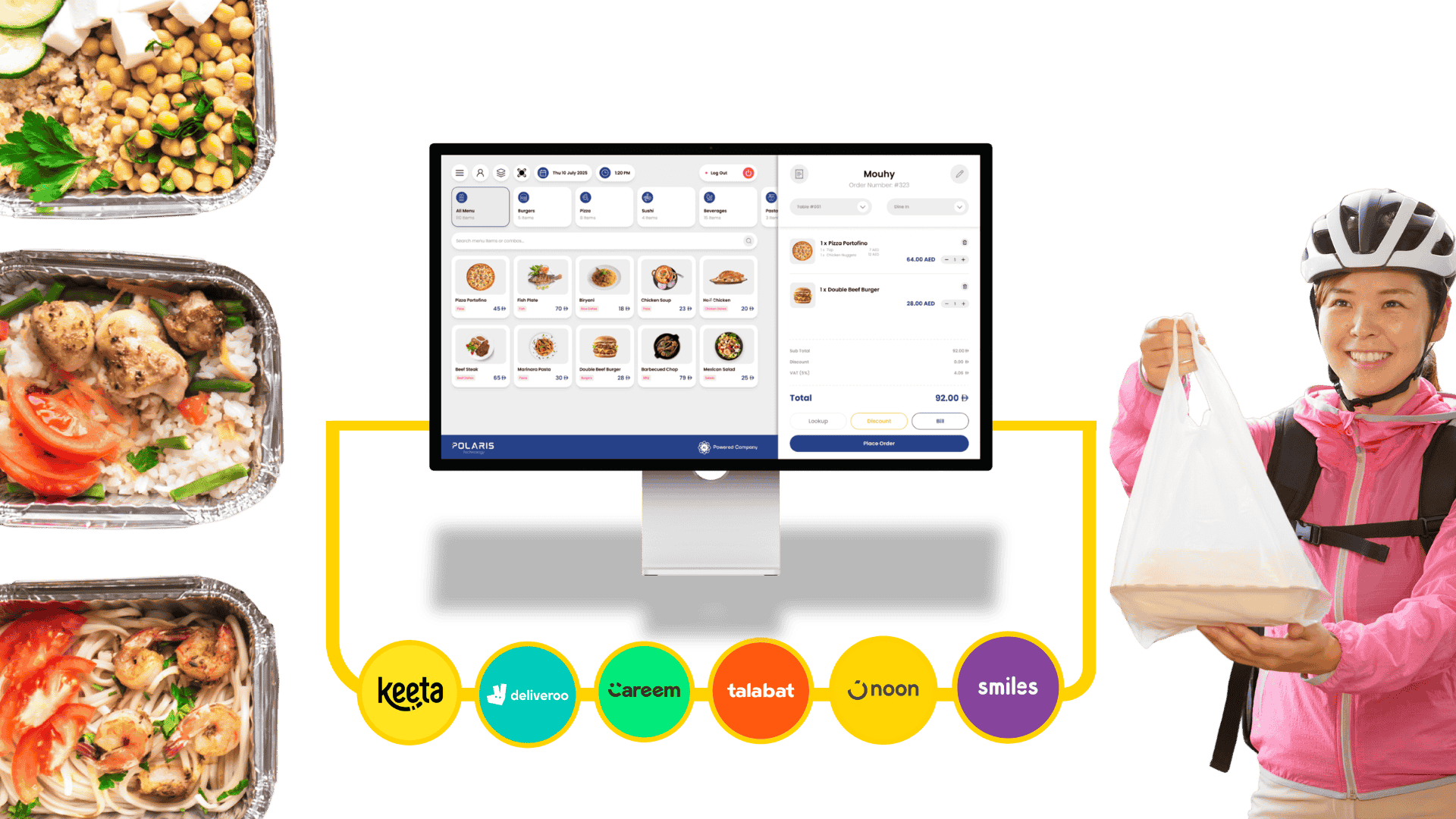
Polaris ERP connects all the major delivery platforms: Talabat, Deliveroo, noon, Careem, and Keeta (among others), into one single screen. Whether you are operating in the UAE or Saudi Arabia, Polaris ERP gives your staff a clear, unified view of every single order, linked with your POS.
Why delivery integration matters for your bottom line:
- Solves Order Confusion: You see everything in one place without switching tablets, to avoid orders being missed or delayed.
- Faster Kitchens: The orders received go straight to the POS, which informs the kitchen (when it’s linked with a kitchen display system), cutting down preparation time.
- Fewer Errors: Sending out the wrong bags and losing money on refunds will be a problem of the past.
The market is changing, and relying only on walk-in customers is a risk you can’t afford to take anymore to keep your restaurant business operational. You need to be fast, organized, and integrate your restaurant’s app with multiple delivery platforms.
This is a valid fact whether it is reflecting a regional conflict, a global pandemic like COVID-19, or any other unpredictable disruption. The risk of relying solely on foot traffic is too high, and a restaurant that isn’t integrated with delivery apps is a restaurant that is vulnerable to closing down.
You may also be interested in:
People Also Asked – Food Delivery Apps FAQs:
If I use two or more delivery apps for my restaurant, will I see orders in a single screen?
No. When you partner with two or more delivery platforms, each comes with its own tablet, showing orders coming in their own tablet. This often causes confusion for staff handling orders, which can result in errors such as mixing delivery address, missing orders, or high delivery times. To see all orders from different platforms in a single screen, you need a delivery app integration solution like Polaris ERP. This will connect all delivery apps with your POS, so you don’t have to switch from tablet to tablet, and deliver orders to your customers in time, error-free.
Are there high costs in switching to Polaris ERP’s delivery integration solution?
Our pricing is structured to offer the best value-to-performance ratio in the UAE market. We focus on providing a high-tier, strong solution that pays for itself through increased kitchen efficiency and data-driven growth. By unifying your delivery platforms and branch data into one screen, you gain access to critical insights on customer behavior and area-specific preferences. This isn’t just a delivery tool; it’s a high-quality integration that helps you scale your delivery revenue month after month.
What are the benefits for my restaurant if I adopt delivery integration?
In a market where dine-in footfall is fluctuating (currently the case of the UAE), delivery integration is your strongest tool for business resilience. It moves your operations from reactive to strategic with three key benefits:
Market Resilience: It protects your revenue during periods of uncertainty by ensuring your delivery channel is as reliable and professional as your dining room.
Menu Profitability: You gain instant access to Average Order Value (AOV) and top-performing dish combinations per branch. This data allows you to engineer a higher-margin menu tailored to what your customers actually want.
Real-Time Performance: Monitor every branch from one screen. You can identify underperforming locations in real time and launch targeted promotions to boost revenue exactly where it’s needed.
Book a free demo